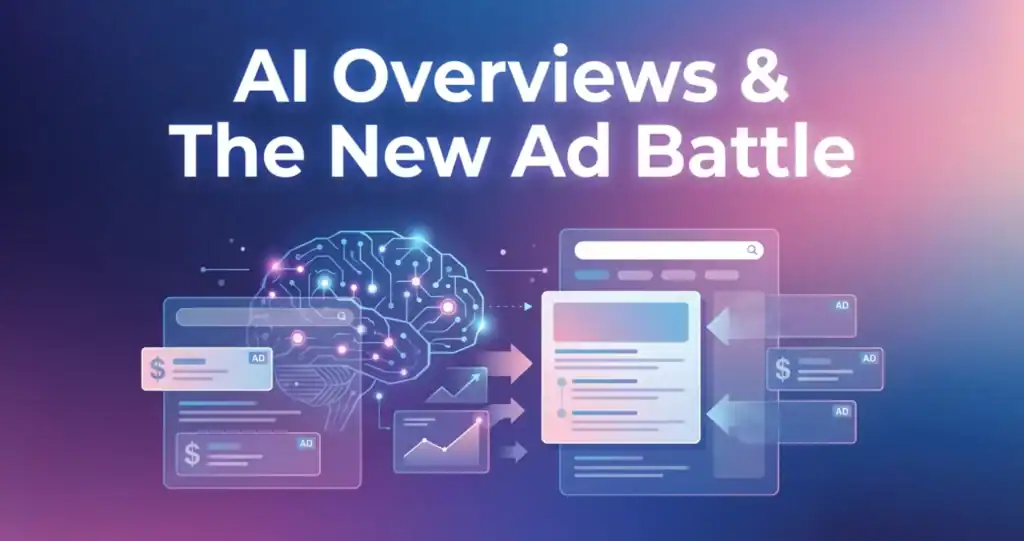

In 2025, Google AI Overviews (AIOs) have quietly changed the search results page. This shift is creating significant challenges for paid advertisers. Recent data from Adthena shows that AIOs now occupy the top spot in search results, pushing ads and organic listings further down. Ranking #1 in ad auctions is no longer sufficient; you now need to secure placement above the AI answer box itself. Search Engine Land
If advertisers don’t adjust, they risk losing visibility, clicks, and ultimately conversions. However, for those willing to rethink their strategies—ranging from bidding to copywriting—there are still effective ways to succeed. Here’s what the data tells us and how you can respond.
What the Data Shows: Ads Losing Top-Spot Real Estate
- Ads appear below AI Overviews 25% of the time, on average. This means even a top-ranked ad might not show “above the fold.”
- Some industries are more affected than others. For instance, healthcare ads are below the AI box nearly 65% of the time.
- Device type matters. On mobile, where screen space is limited, AIOs frequently dominate the top, pushing ads out of sight, particularly in sectors like automotive.
- Even for high-intent, commercially valuable queries, ads associated with AIO results see much lower click-through rates. One recent analysis found paid-search CTR dropping from 21.27% (with no AIO) to 9.87% when AIOs appeared.
In short, even the best ad campaigns face a SERP layout that favors AI-generated summaries over paid placements.
Why This Shift Matters More Than You Think
-
Auction dynamics are disrupted.
Higher competition and bids won’t guarantee visibility. Since AIOs occupy prime spots, even first-ranked ads could be hidden, leading to fewer clicks despite top-tier ad rank.
-
Ads need to stand out more.
With AI Overviews providing generic, synthesized answers, ad copy must do more than align with user intent. It must deliver value by creating urgency, offering trust signals, and presenting unique deals—reasons for users to leave Google’s summary and click through to your site.
-
Long-tail and informational queries may create new opportunities.
Interestingly, in some sectors (like automotive or travel), ads perform better on longer, informational queries than on short, high-volume commercial terms. This indicates that there’s potential in mid-funnel and research-phase searches. Search Engine Land
-
Mobile-first strategies are increasingly important.
As AI Overviews often dominate mobile SERP layouts, advertisers must adjust bids, creative, and user experience for mobile users. Failing to do this risks wasting ad spending on placements users do not see.
What Advertisers Should Do Now: Three Strategic Moves
-
Audit Your Keyword and Device Performance
Break down your campaigns by:
- Query intent (short, commercial vs. long, informational)
- Device (mobile vs. desktop)
You may find campaigns that once thrived on desktop struggle on mobile under AI SERPs—or the opposite. Reallocate your budget based on these findings.
-
Rewrite Ad Copy to Outperform AI Summaries
Your ads should offer what AI cannot provide—human clarity, urgency, unique offers, brand promises, and compelling calls to action. Don’t just match intent; aim to stand out.
-
Expand Into Mid-Funnel and Informational Keywords
As data indicates, in sectors like automotive and travel, mid-funnel informational searches (for example, “best car maintenance tips 2025”) often allow ads to display above AIOs. These can be high-value, lower-competition opportunities.
-
Test Device-Specific Bid and Creative Strategies
Since mobile SERPs frequently hide ads under AI Overviews, run device-specific campaigns. You might find better performance on desktop or customize ad copy significantly for mobile users.
-
Focus on Conversions, Not Just Clicks
With AI Overviews increasing the likelihood of “zero-click” results, measure success in terms of conversions (like leads, sign-ups, purchases), not just impressions or CTR.
10 FAQs — What Advertisers and Marketers Are Asking
Q. What are AI Overviews, and why do they matter for ads?
AI Overviews are generative-AI summaries that show at the top of many search results, often pushing traditional ads below the fold. This reduces visibility and click-through rates.
Q. How often do ads show above AI Overviews?
According to Adthena, ads stay above AI Overviews about 75% of the time across many industries. Still, that leaves 25% where ads get pushed down.
Q. Which industries are most impacted by this shift?
Industries like healthcare and automotive see the most significant drop in ad visibility beneath AI Overviews. In healthcare, ads are pushed below the AI box nearly 65% of the time.
Q. Does device type affect ad visibility under AI Overviews?
Yes. Mobile screens are more impacted than desktops because the AI box occupies more space on smaller screens, often moving ads out of initial view.
Q. Are certain query types safer for ad visibility?
Yes. Mid-funnel or informational queries (longer search phrases) often allow ads to show above AI Overviews, especially in sectors like automotive and travel.
Q. How much has ad click-through rate dropped due to AI Overviews?
One analysis noted a drop in paid-search CTR from about 21.3% (with no AI Overview) to 9.9% when AIOs appeared—a nearly 53% decrease.
Q. Should advertisers stop bidding on highly competitive keywords?
Not necessarily, but they should modify their strategy. This includes improving copy, testing mid-funnel terms, and reallocating spending to queries and devices with better visibility.
Q. Can ad copy overcome the AI Overview advantage?
Yes, but it must provide human value that AI lacks, such as urgency, trust signals, strong offers, and emotional hooks—reasons for a user to click.
Q. Is this simply another Google update that will settle once advertisers adapt?
Most likely. As AI Overviews become standard, advertisers who adjust with smarter bidding, copy, and funnel strategy will continue to find value.
Q. What metrics should advertisers focus on now?
Conversions (leads, purchases, sign-ups), cost-per-conversion, device performance, and query-level ROI should take precedence over mere impressions or clicks.