
For years, SEO has been the foundation of organic growth for small and medium-sized businesses. A good presence in search results meant stability, long-term returns, and steady traffic. But a new survey highlighted by Search Engine Land shows a significant change in the digital landscape: social media has now overtaken SEO as the main source of traffic for SMBs.
This shift means more than a change in preference; it signals a larger transformation in how users search, discover, and interact with brands in 2025. With algorithm updates changing search results, the popularity of short-form content, and social platforms becoming key places for discovery, SMBs are moving toward areas that offer immediate results, virality, and direct engagement.
Below is a breakdown of what this shift means, why it’s happening, and how businesses can respond.
Why Social Media Pulled Ahead of SEO
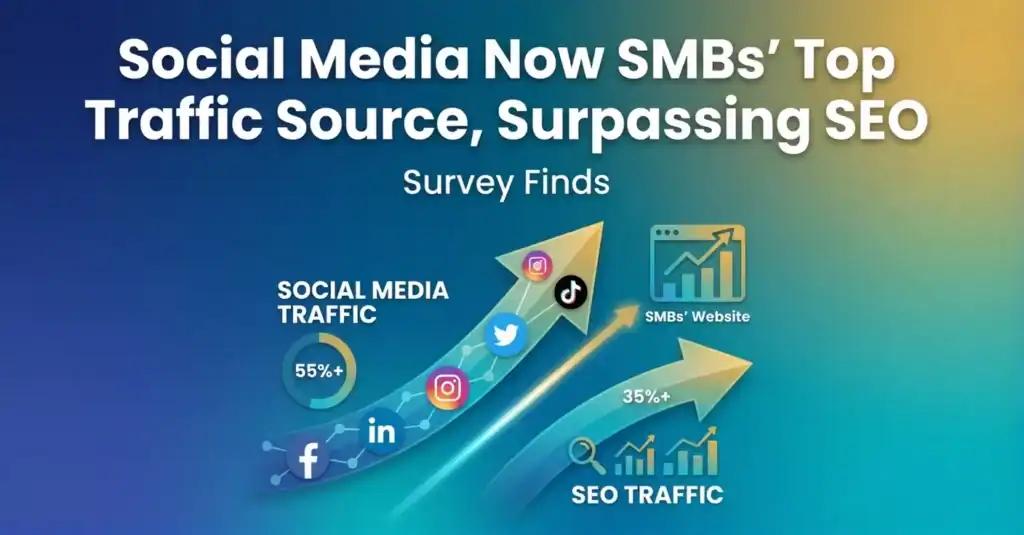
The survey shows that 56% of SMBs now view social media as their main source of traffic, while SEO accounts for 34%. Even though SEO still matters, the reasons for this change are clear:
- Social Platforms Have Become Search Engines
TikTok, Instagram, and YouTube aren’t just for entertainment; they’ve turned into search hubs. Users—particularly younger ones—now often skip Google for discovering products or services. Instead, they search:
- “Best cafes near me” on TikTok
- “How to fix a leaky faucet” on YouTube
- “Affordable skincare routine” on Instagram Reels
This discovery model rewards SMBs that provide relatable, short-form video content instead of focusing on long-term keyword rankings.
- Social Media Delivers Instant Visibility
SEO needs time, authority building, and alignment with algorithms. Social media, however, relies on:
- Relevance
- Engagement
- Trends
- Virality
For SMBs wanting to grow fast, social media offers a low barrier to entry and quick exposure.
- The Rise of Creator-Led Commerce
Creators have started acting as digital storefronts. When they showcase a local shop, service, or product, it can generate immediate traffic and sales. SMBs are working with:
- Micro-influencers
- Community creators
- Local user-generated content
- Brand ambassadors
This setup rarely connects with SEO but can significantly outperform it in reach and trust.
- Declining Organic Visibility in Search
AI-driven search, zero-click results, and ad-heavy search result pages have limited organic opportunities. Businesses report:
- Fewer clicks from organic listings
- AI summaries reducing visits
- More paid results pushing organic listings down
With less organic space available, SMBs are turning to platforms where they can still grow their reach without relying on Google’s changing algorithms.
How SMBs Are Using Social Media to Drive Traffic
The survey shows where SMBs are putting their efforts.
Top Traffic-Driving Platforms for SMBs
- Facebook – still strong for community-focused businesses
- Instagram – effective for lifestyle, retail, beauty, and local services
- TikTok – rapidly growing as a discovery tool
- YouTube – offers lasting visibility through educational content
- LinkedIn – significant for B2B lead generation
Across various industries, video content—especially short-form—is the best-performing format.
The Content That Drives the Most Traffic
SMBs find success with:
- Short educational clips
- Tutorials or how-to videos
- Reviews or demos
- Behind-the-scenes content
- Local story-driven posts
- User-generated content
This closely aligns with how audiences look for and consume information in 2025.
Is SEO Losing Its Value for SMBs? Not Exactly.
While social media now brings in more traffic, SEO isn’t going away. It’s changing.
SEO Is Becoming More Competitive
Higher-quality content, authority signals, and matching user intent are more important than before.
AI Search Is Changing Discovery
With Google’s AI Overviews and Bing’s AI responses, SMBs that do not invest in structured data, topical authority, and trust signals will struggle to maintain visibility.
Local SEO Remains Critical
Google Maps, local reviews, and being visible in the community still heavily influence customer decisions—especially for service-based businesses.
Customers Still Search to Validate
Even if they find you on social media, customers still use search engines to:
- Verify legitimacy
- Compare options
- Check reviews
- Look for detailed information
So while social media may be the leading source of traffic, SEO remains a vital channel for validation and conversion.
What This Shift Means for SMB Digital Strategy
The biggest takeaway is that SMBs need a strategy that combines social discovery with search visibility. Here’s how to adapt.
- Treat Social Media as a Search Channel
Optimize your social profiles like you do your website. Add:
- Keyword-rich bios
- Local identifiers
- Service-specific keywords
- Search-friendly captions
People are searching “best dentist in Pune” on Instagram—your content must fit that behavior.
- Build a Strong Organic Social Content Engine
The new traffic approach benefits brands that post regularly. Include:
- Weekly Reels or TikToks
- Customer stories
- Tutorials
- Quick tips
- Before/after posts
- Team introductions
- Live videos
- Popular audio clips
Social media now impacts every stage of the customer journey.
- Invest in Influencers and User-Generated Content
Content from creators performs better than brand content on all platforms. SMBs should:
- Partner with micro-creators
- Encourage customer testimonials
- Run campaigns for user-generated content
- Offer small rewards for content creation
Authenticity matters more than production quality in today’s environment.
- Use SEO Smarter, Not Harder
SEO still counts, but the approach has changed. Focus on:
- Building topical authority
- Publishing content clusters
- Using structured data
- Strengthening trust signals
- Optimizing for AI search
- Regularly updating older content
SEO now plays a role in building trust and conversion while social media drives discovery and awareness.
- Combine Social Insights With SEO Strategy
Social media quickly shows you:
- What questions users ask
- What trends are important
- What content formats work best
- What pain points matter
These insights can—and should—help shape your SEO content strategy. If a Reel about “budget kitchen renovation tips” goes viral, you should definitely create supporting SEO content on the same topic.
- Balance Long-Term and Short-Term Growth
Social media provides speed. SEO offers stability. Together, they create momentum. SMBs that rely on only one will struggle.
- Use Analytics to Understand Real Impact
Traffic sources are shifting, but knowing why traffic increases is crucial. Track:
- Social-to-website conversions
- Time spent on site
- Search validation behavior
- Local ranking positions
- AI search impressions
- Branded search volume
If social media raises awareness, you should see a noticeable rise in branded search queries.
Final Thoughts: The Marketing Landscape Is Rebalancing
Social media surpassing SEO as the top source of traffic for SMBs doesn’t mean SEO is dead; it means how users discover content is changing, and SMBs are finally shifting to meet that change.
Social platforms provide spontaneity, quick reach, and community power. SEO offers trust, intent alignment, and long-term value.
The future isn’t just about social media or SEO. It’s about using both together. SMBs that build strong visibility in both areas will endure algorithm changes, outpace competitors, and prosper in this new world focused on discovery.
10 FAQs for “Social media beats SEO as SMBs’ top traffic source”
Q. Why is social media now driving more traffic than SEO for SMBs?
Because social platforms have become key places for discovery. Users are increasingly searching on TikTok, Instagram, and YouTube instead of Google, while social content provides quicker visibility and engagement compared to SEO’s slower outcomes.
Q. Does this mean SEO is no longer important for small businesses?
Not at all. SEO remains crucial for credibility, local search, and long-term growth. Social media leads in awareness, while SEO is essential for validation and conversions.
Q. Which social platforms are most influential for SMB traffic?
According to survey results, Facebook, Instagram, TikTok, YouTube, and LinkedIn. Short-form video platforms especially shape customer discovery habits now.
Q. How has customer search behaviour changed?
Users are increasingly searching directly on social platforms—especially younger audiences—looking for reviews, how-to videos, product demos, and recommendations instead of long-form web content.
Q. What type of content drives the most traffic from social media?
Short, educational videos; tutorials; customer testimonials; product demos; behind-the-scenes content; and user-generated content. Reels and TikToks consistently outperform other formats.
Q. Does the rise of social media reduce the effectiveness of local SEO?
No—local SEO remains essential. Most customers still use Google Maps and search engines to confirm business information, check reviews, and compare services after initially discovering them on social media.
Q. How can SMBs balance social media marketing and SEO effectively?
Use social media for visibility and quick discovery, and optimize your website for trust-building, conversions, and long-term search visibility. Both channels support each other and enhance brand authority.
Q. Should SMBs prioritize video content in their strategy?
Yes. Video—especially short-form—is the main driver of visibility on almost all major platforms. It also increases engagement, boosts retention, and benefits both social media and SEO when reused properly.
Q. Can social insights be used to improve SEO content?
Absolutely. Social comments, trends, and user questions reveal real-time search intent. Use these insights to create keywords, blog topics, FAQs, or long-form content to enhance your SEO strategy.
Q. How can SMBs measure whether social or SEO is driving the most valuable traffic?
Track metrics in Google Analytics, Search Console, and platform insights. Compare session duration, conversion rates, bounce rates, and growth in branded search to understand each channel’s real impact.